Socail Media
ProgramGeeks Social: The Ultimate Tech Community for Modern Developers

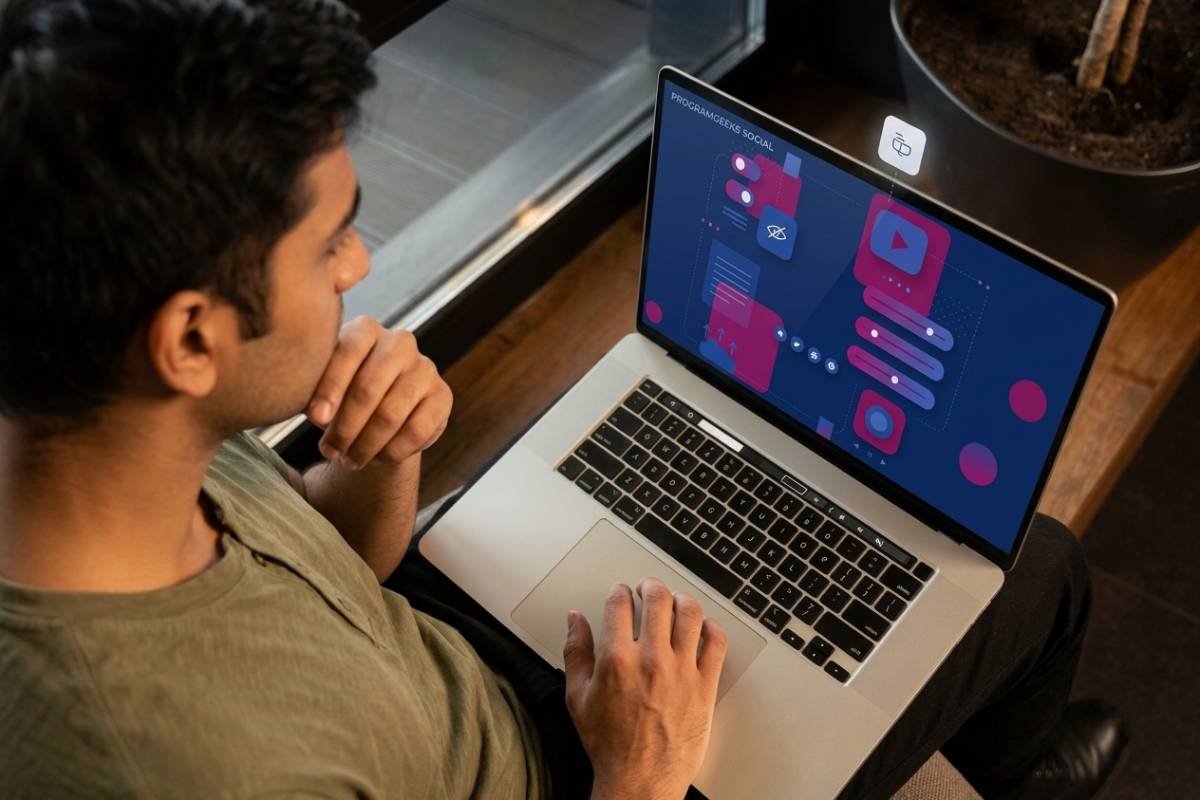
Introduction
In a world where technology evolves faster than most people can keep up with, finding a reliable, knowledgeable, and genuinely engaged community can be the difference between stagnation and growth. ProgramGeeks Social has emerged as one of the most talked-about digital spaces where developers, tech enthusiasts, and coding professionals come together to share ideas, solve problems, and stay ahead of industry trends. Whether you are a seasoned software engineer or someone just stepping into the world of programming, this platform offers something meaningful at every level. It is not just another social network — it is a carefully cultivated ecosystem built specifically for those who live and breathe technology, and its influence on how developers interact online is becoming increasingly difficult to ignore.
What Makes a Tech Community Platform Truly Valuable
Before diving deeper into what this platform offers, it is worth reflecting on what separates genuinely valuable tech communities from the noise of the broader internet. The average developer spends years honing a craft that demands constant learning, adaptation, and collaboration. Traditional social media platforms were never designed with this reality in mind. They prioritize engagement over expertise, viral content over verified knowledge, and broad audiences over focused communities. As a result, developers often find themselves scrolling through irrelevant content just to find a single insightful post or discussion thread that actually speaks to their professional needs.
A truly valuable tech community understands that developers need more than just a place to post code snippets. They need forums where debates are grounded in real experience, spaces where beginners are encouraged rather than dismissed, and channels where cutting-edge developments in areas like machine learning, cloud infrastructure, open-source software, and cybersecurity are discussed with depth and nuance. The value of any developer-focused platform ultimately comes down to the quality of its conversations, the diversity of its contributors, and the reliability of its resources.
Will You Check This Article: NovaPG: The Next-Generation Platform Redefining PostgreSQL Management
The Rise of Niche Social Platforms in the Developer World
The past several years have witnessed a significant shift in how professionals across all industries approach social networking. LinkedIn once dominated professional discourse, Twitter served as a real-time pulse for tech news, and Reddit offered chaotic but often brilliant community discussions. However, each of these platforms came with frustrating limitations for technical users. Algorithms that buried specialized content, comment sections overwhelmed by off-topic debates, and monetization strategies that prioritized advertisers over authentic community building all contributed to a growing dissatisfaction among developers.
This dissatisfaction created a genuine market opportunity for niche platforms built from the ground up with technical users in mind. Communities specifically designed for programmers began gaining traction, offering cleaner interfaces, better content categorization, meaningful moderation, and collaborative tools that made sense in a development context. This broader trend toward specialization in online communities is precisely the environment in which platforms dedicated to programming and technology have flourished. Users are increasingly willing to leave massive general-purpose platforms behind in favor of spaces where their interests are actually understood and respected.
Core Features That Define the ProgramGeeks Social Experience
One of the most compelling aspects of a platform like ProgramGeeks Social is how thoughtfully its features align with the actual needs of its audience. Rather than bolting technical features onto a social template designed for casual entertainment, the platform appears to have been built with developer workflows in mind from the very beginning. Discussion threads are structured to support long-form technical explanations, making it easy to walk through complex topics step by step without the content being truncated or buried beneath engagement-farming posts.
Code sharing is another area where developer-focused communities must deliver, and platforms in this space typically integrate syntax highlighting, version tracking, and collaborative editing to make sharing and reviewing code a genuinely useful experience rather than a frustrating workaround. Beyond code, the ability to organize knowledge — whether through tags, categories, or curated collections — is critical for users who want to build on previous discussions rather than reinventing the wheel every time a similar question arises. When these structural elements come together effectively, the platform stops feeling like a social network and starts functioning more like a living, searchable knowledge base that improves with every contribution.
Notification systems, content discovery algorithms, and recommendation engines also play a significant role in shaping user experience. On a platform designed for developers, these systems ideally surface content based on technical relevance rather than raw popularity. A post about a niche bug in a lesser-known framework might be exactly what one developer needs, even if it never goes viral. Prioritizing relevance over virality is one of the hallmarks of communities that developers actually trust and return to consistently.
How ProgramGeeks Social Supports Both Beginners and Experts
One of the most persistent challenges in any technical community is managing the enormous skill gap between its members. Beginners often feel intimidated and dismissed, while experts can grow frustrated if basic questions dominate discussions that were meant to explore advanced topics. Striking the right balance requires not just good intentions but deliberate structural design and cultural norms that are actively maintained by moderators, contributors, and the platform itself.
Communities that get this right tend to create separate but interconnected spaces for different experience levels. Beginner-friendly zones where foundational questions are welcomed without judgment exist alongside advanced discussion boards where experienced developers can dive deep into architectural decisions, performance optimization, security vulnerabilities, and emerging paradigms without constantly stopping to explain first principles. Mentorship programs, learning paths, and resource libraries serve as bridges between these two worlds, giving newer developers a structured way to grow while giving experienced contributors a meaningful way to give back.
The social dynamics at play here are genuinely important. When a beginner receives a thoughtful, patient response to a question that might seem trivial to an expert, that interaction often becomes a pivotal moment in their development journey. It builds loyalty to the community, reinforces a culture of generosity, and ultimately produces contributors who pay that kindness forward. Platforms that foster this cycle of mentorship and reciprocity tend to build the most enduring and vibrant communities in the long run.
The Role of Open Source Collaboration in Modern Tech Communities
No discussion of developer communities in the contemporary era would be complete without examining the central role of open source collaboration. Open source software has transformed the technology landscape over the past three decades, democratizing access to powerful tools, enabling rapid innovation, and creating extraordinary opportunities for developers to contribute to projects used by millions of people around the world. Platforms that support and amplify open source culture occupy a particularly important position in the developer ecosystem.
Communities built around programming thrive when they make it easy for members to discover open source projects worth contributing to, discuss the technical decisions behind popular repositories, and collaborate on solutions to shared problems. This might mean integrating with platforms like GitHub, showcasing community-driven projects, or organizing collaborative coding events and hackathons that bring developers together around a common goal. When a platform successfully channels the energy and creativity of its members into open source contributions, it creates a compounding positive effect — the community grows more capable, the projects benefit from diverse perspectives, and individual contributors gain real-world experience that accelerates their careers.
Beyond individual projects, open source culture carries a philosophical weight that resonates deeply with many developers. It embodies values of transparency, shared ownership, and collective progress that stand in contrast to the proprietary, closed systems that dominated the early software industry. Communities that honor and amplify these values tend to attract developers who are not just technically skilled but genuinely motivated by a desire to contribute to something larger than themselves.
Career Growth and Professional Networking in Developer Communities
While the intellectual and collaborative aspects of tech communities are compelling in their own right, it would be disingenuous to ignore the very real career implications of active participation in these spaces. Professional networking has always been a cornerstone of career advancement, and in the technology industry, where talent is highly sought after and reputation carries significant weight, the communities a developer engages with can have a direct impact on their professional trajectory.
Platforms that bring together developers from different backgrounds, companies, and specializations create natural networking opportunities that can lead to job referrals, freelance partnerships, co-founder relationships, and mentorship connections that would be difficult to forge through traditional channels. Recruiters and hiring managers in the tech industry are increasingly looking beyond résumés to evaluate candidates based on their public contributions — the thoughtfulness of their answers in community discussions, the quality of their open source contributions, and the depth of their engagement with contemporary technical challenges.
For developers who take their participation seriously, active engagement in a respected community can become a form of portfolio building. Consistently providing insightful solutions, contributing original research, and demonstrating expertise across multiple domains builds a public record of competence that speaks louder than any certification or degree. This is particularly valuable for self-taught developers, career changers, and those from regions where access to traditional credentialing institutions is limited. A quality community levels the playing field in ways that legacy hiring structures never could.
Conclusion: Why ProgramGeeks Social Matters in the Future of Tech
As the technology industry continues its relentless evolution, the communities that developers inhabit and contribute to will play an increasingly important role in shaping what gets built, how it gets built, and who gets to participate in the process. ProgramGeeks Social represents a meaningful part of this story — a platform that understands the specific needs of technical users and creates conditions for genuine knowledge sharing, collaborative problem-solving, and professional growth. The value of such spaces cannot be measured simply in user numbers or engagement metrics. It is measured in the quality of the ideas exchanged, the careers accelerated, the problems solved, and the connections forged between people who might never have met otherwise.
In a landscape where digital interaction can feel shallow and transactional, communities built around shared expertise and genuine passion for technology offer something increasingly rare: depth. They remind developers that behind every line of code is a human being trying to make something work, something better, something worth building. For anyone navigating the complex, exciting, and sometimes overwhelming world of modern technology, finding the right community is not a luxury — it is an essential part of the journey. And platforms dedicated to that mission are more important today than ever before.
Read More: Dollartimes.co.uk


ProgramGeeks Social: The Ultimate Tech Community for Modern Developers

NovaPG: The Next-Generation Platform Redefining PostgreSQL Management

iofbodies.com: Your Complete Guide to Understanding Body Composition and Bone Health

Daylin Ryder: The Creative Visionary Redefining Authentic Storytelling

DigitalEdge.org: Your Gateway to Smarter Digital Growth

Louisa Kochansky: The Visionary Leader Redefining Modern Excellence
-
 Celebrity2 days ago
Daylin Ryder: The Creative Visionary Redefining Authentic Storytelling
-
 Tech2 days ago
DigitalEdge.org: Your Gateway to Smarter Digital Growth
-
 Celebrity2 days ago
Louisa Kochansky: The Visionary Leader Redefining Modern Excellence
-

 Blog27 minutes ago
Alaskan Seiti: The Deep-Sea Treasure Reshaping Sustainable Seafood
-
 Business2 days ago
Pertadad: Meaning, Origins, and Its Rising Digital Identity
-
 Blog23 minutes ago
Cintia Cocio: The Rise of a Fitness Icon Who Inspires Millions
-
 Tech14 minutes ago
iofbodies.com: Your Complete Guide to Understanding Body Composition and Bone Health
-
 Tech2 days ago
TXMyZone: Your Ultimate Guide to Smarter Digital Zones