Celebrity
Daylin Ryder: The Creative Visionary Redefining Authentic Storytelling


In a media landscape dominated by perfectly filtered images, rehearsed narratives, and performance-driven content, very few voices manage to cut through the noise with something genuinely real. Daylin Ryder is one of those rare voices. A multidisciplinary artist, storyteller, and digital creator, Ryder has steadily carved out a distinctive presence across independent creative communities and online platforms by doing what so many creators are afraid to do — being completely, unapologetically honest. This article takes a comprehensive look at who she is, where she came from, what drives her work, and why the world is paying closer attention with every passing year.
The Early Life That Shaped an Unconventional Artist
Every compelling creative voice has a foundation, and for this rising storyteller, that foundation was built quietly and thoughtfully during childhood. Growing up in an environment that many would describe as modest but emotionally rich, she was raised in a household where storytelling was treated not as entertainment but as something essential. Whether it came through books stacked on shelves, conversations shared around a family table, or the slow unfolding of personal memories, narrative was always present. These early surroundings gave her a natural instinct for observation — the ability to notice what others walked past without looking: the way afternoon light shifts across a room, the weight of a silence between two people, the unspoken emotion folded inside an ordinary moment.
As a child, she channeled this awareness through journaling, sketching, and simple photography. These were not hobbies in the casual sense. They were her methods of processing the world. Teachers who recognized her depth encouraged her to experiment without fear, and family members who saw her creativity as something to be nurtured rather than redirected helped her develop the self-trust that every artist eventually needs. A poetry assignment in the seventh grade sparked a deep love for language. An art teacher who valued boldness over correctness taught her that rules existed to be questioned. A school film club introduced her to the transformative power of visual storytelling. By the time she entered adulthood, the internal architecture of her creative identity was already well under construction.
Will You Check This Article: Cryptoboostly.co.uk
Building a Creative Identity in the Digital Age
The path from a creatively inclined young person to a recognized digital artist is rarely a straight line, and her journey was no exception. She did not arrive in the public eye through a viral moment or a calculated marketing campaign. Her growth was organic, gradual, and built entirely on the quality of what she created. Her early work consisted of personal essays, quiet visual experiments, and reflective photography shared through digital platforms to small but genuinely engaged audiences. There was nothing polished or manufactured about these early pieces — and that was precisely the point.
As the internet increasingly rewarded performance over sincerity, her willingness to share imperfection became a form of quiet resistance. She wrote about confusion alongside clarity, about what it felt like to be uncertain, to be healing, to be searching for meaning in ordinary places. Audiences who found her work felt something that had become increasingly rare online: recognition. They saw their own experiences reflected back at them without judgment or embellishment. This kind of connection is difficult to manufacture, and it cannot be bought through advertising. It only grows when someone with genuine emotional insight decides to share it honestly and consistently — which is exactly what she did.
The Artistic Philosophy Behind the Work
What distinguishes truly memorable creative voices from the vast field of content creators is not production value or follower count — it is the coherence of a guiding philosophy. For this artist, that philosophy is rooted in a single, deeply held conviction: that art must reflect life as it actually is. Not as people wish it were, not as brands want to package it, but in all its complexity, contradiction, and quiet beauty.
This belief manifests across every medium she works in. Her short films — most notably the widely praised “Small Worlds” series — are built around intimate moments rather than dramatic arcs. They linger on texture, light, and the emotional weight of silence. Dialogue is minimal; meaning is carried through visual detail and the careful architecture of feeling. Her written essays tackle creativity, identity, and emotional resilience with a literary depth unusual for digital publishing. Even her photography resists the polished aesthetic so prevalent in contemporary visual culture, opting instead for images that feel tactile, lived-in, and honest.
She has described her influences as writers and filmmakers whose work prioritizes interior emotional truth over conventional narrative momentum — creators who find entire universes inside the domestic, the personal, and the overlooked. This influence is unmistakable in her output. There is always the sense, when engaging with her work, that you are being trusted with something genuine rather than sold something convenient.
Daylin Ryder’s Rise Through Independent Creative Communities
While mainstream media and major platforms often spotlight creators who fit neatly into established categories, independent creative communities operate by different standards. They value originality, emotional honesty, and the courage to work outside commercial pressures. It is within these communities that this creative voice first found her footing, and it is largely through their support that her reputation has grown.
Her “Small Worlds” short film series earned recognition within independent film circles for its restraint, visual intelligence, and emotional precision. Each film in the series runs under fifteen minutes yet carries the emotional weight of a feature-length story. Critics and audiences within the indie space praised the work for its rare ability to make small moments feel significant — not through manipulation or sentimentality, but through genuine attention and craft. This recognition introduced her work to audiences who might not have discovered it through her written or social media output, creating a cross-pollination of followers who came from different entry points into her creative universe.
Beyond film, her presence in digital storytelling communities has grown steadily through consistent engagement, collaborative projects with other independent artists, and a willingness to be visible not just as a finished creator but as a person still in the process of learning. She has participated in community events, shared her process openly, and supported other emerging voices — all of which reinforce the authenticity that is central to her brand. In an era when many creators treat their audience as a metric rather than a community, this relational approach is refreshingly rare.
Resilience, Recovery, and the Courage to Create Openly
No honest account of this creative figure would be complete without acknowledging the personal resilience that underlies her work. Multiple credible profiles have highlighted a journey that includes overcoming significant personal adversity — including a prolonged struggle with addiction that lasted over a decade. Rather than concealing this part of her story or treating it as a liability, she has transformed it into the emotional core of much of her creative output. Her willingness to speak openly about recovery, identity, and the process of rebuilding oneself has resonated powerfully with audiences who have faced similar challenges.
This openness is not performative vulnerability — the kind designed to generate engagement through shock or sympathy. It is something quieter and more substantive: a genuine belief that sharing difficult truths creates meaningful connections and that personal experience, honestly processed, can become a source of inspiration for others. Her involvement in community outreach, mentorship, and advocacy for mental health awareness within creative industries reflects the same philosophy. She does not treat her platform as a stage for self-promotion. She treats it as a space for honest conversation, and her growing audience responds to that distinction with loyalty and trust.
Entrepreneurial Vision and the Founding of Ryder Visions
Creativity and business acumen rarely coexist as naturally as they do in this multi-hyphenate creator. Alongside her artistic work, she has demonstrated a clear understanding of how creative direction, brand storytelling, and digital strategy intersect in the modern media environment. She founded Ryder Visions, a boutique creative agency focused on what she calls “authentic disruption” — the practice of helping brands communicate in ways that feel organic rather than manufactured, particularly in reaching Gen Z audiences who have developed a highly sensitive radar for insincerity.
Her professional career began in freelance digital marketing, where she spent her early years building an independent portfolio that proved her capabilities without leaning on industry connections. Her breakthrough came when she was engaged to rebrand a struggling lifestyle publication, and her digitally focused approach drove significant engagement among younger demographics. This success established a model she has applied across subsequent collaborations with international brands, independent filmmakers serving as a visual consultant, and speaking engagements at media and branding summits. The range of her professional work reflects not just versatility but a coherent vision: that the most effective storytelling, whether for an individual, an art project, or a global brand, is always rooted in something true.
Community Impact and the Responsibility of Influence
What elevates certain creators from interesting to genuinely influential is the way they use their platform in relation to the communities around them. For this artist, that relationship is characterized by a deep sense of responsibility. She has been consistently active in initiatives that support emerging artists, advocate for mental health awareness, and create spaces for underrepresented voices in creative industries. Her mentorship work extends to workshops, online engagement, and direct support for young creators who are navigating the same uncertain early stages she once faced herself.
She has spoken candidly about the loneliness that often accompanies early creative careers — the self-doubt, the slow growth, the feeling of working in obscurity before finding an audience. By sharing this reality openly, she validates the experience of many aspiring artists and removes some of the shame that surrounds creative struggle. Her community is not passive; it participates, contributes, and holds genuine affection for what she has built. This level of engagement is the result of years of showing up consistently, treating followers as intelligent adults, and creating content that asks something of its audience rather than simply providing entertainment. In this sense, her impact extends well beyond the work itself.
Conclusion: Why Daylin Ryder Matters in Today’s Creative World
In any era, but especially in the current one — defined as it is by algorithmic content, filtered realities, and the relentless pressure to perform — the emergence of a voice like Daylin Ryder matters considerably. She represents something that the digital creative landscape has been quietly starving for: an artist whose work is not designed to impress but to connect, not calibrated for virality but built for truth. Her journey from a creatively restless young person in a modest household to a recognized filmmaker, essayist, digital creator, and entrepreneur demonstrates what becomes possible when talent is combined with emotional courage and unwavering commitment to authenticity.
The growing public curiosity around her story — reflected in steadily increasing search interest and media coverage across independent and mainstream publications alike — speaks to a broader hunger for realness in a world saturated with artificiality. People are searching not just for her name but for what she represents: the possibility that vulnerability can be powerful, that small stories can carry enormous weight, and that a creative life built on honesty is not just sustainable but increasingly necessary. As she continues to develop her body of work, expand her entrepreneurial ventures, and deepen her community engagement, the trajectory is clear. Daylin Ryder is not simply a rising voice. She is a lasting one.
Read More: Pointmagazine.co.uk

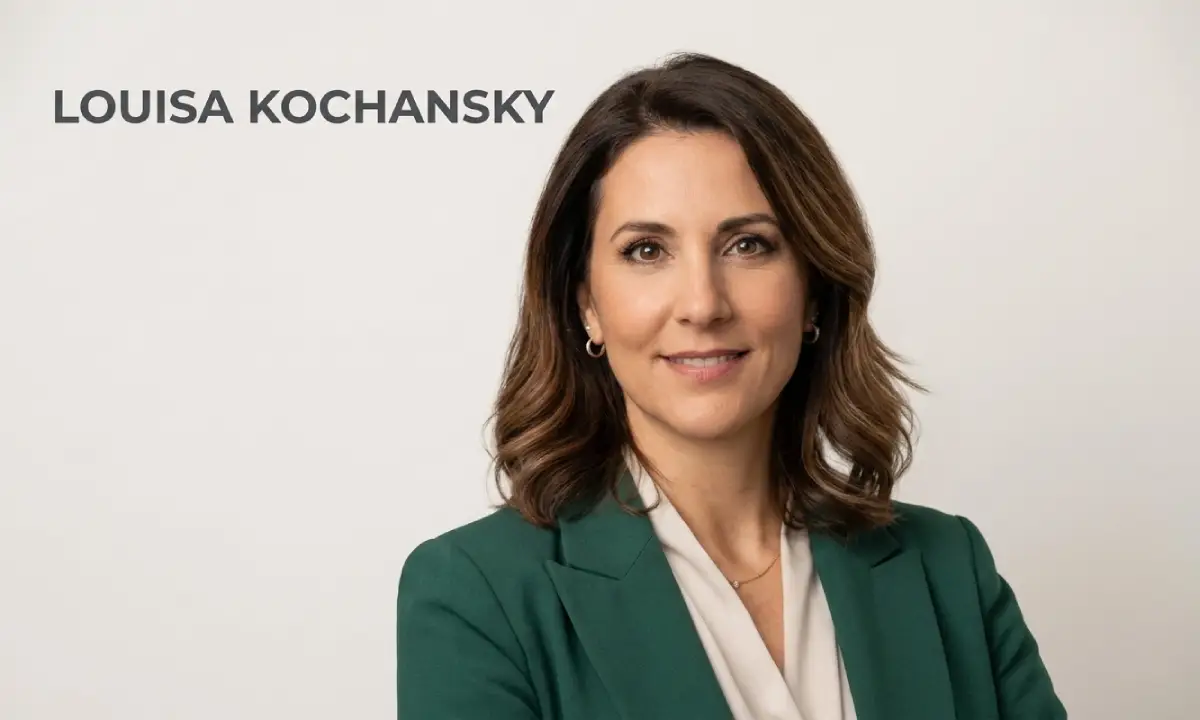
In a world where ambition and authenticity rarely walk hand in hand, the story of Louisa Kochansky stands as a striking exception. She is a figure whose influence stretches across creative entrepreneurship, humanitarian leadership, sports coaching, and brand strategy — a name that carries the weight of genuine achievement across remarkably diverse arenas. To understand her is to appreciate how one person, driven by purpose and armed with resilience, can carve multiple legacies simultaneously. Her journey is not defined by a single triumph or a solitary milestone, but by a consistent thread of meaningful contribution that connects every chapter of her life. Whether she is rebuilding a brand, coaching elite athletes, or advocating for marginalized communities, the same unwavering commitment shapes everything she does. Louisa Kochansky is, by every measure, one of the most compelling and multi-dimensional figures of our time.
A Childhood That Planted the Seeds of Purpose
Every remarkable individual has a beginning that, in hindsight, explains everything. For this visionary, the foundation was laid in an environment that prized curiosity, creativity, and deep moral values. Growing up in a close-knit family where education was treated not merely as a pathway to employment but as a genuine tool for understanding the world, she absorbed lessons that would define her life’s work long before her career formally began. Her parents — themselves people of learning and principle — ensured that books, art, conversation, and critical thinking were regular household companions.
From an early age, she was the kind of child who didn’t just absorb what she was taught but interrogated it. She sketched, she wrote, she solved puzzles and built things with her hands. She was drawn to art, architecture, and the way physical and cultural environments shape human mood and behavior. These were not idle hobbies. They were the earliest expressions of a mind that would go on to blend aesthetics with strategy, empathy with execution, and vision with measurable impact. The communities and landscapes that surrounded her during those formative years gave her an instinctive understanding of context — of how the same idea looks and feels differently depending on where and how it is expressed. That early literacy in context would later become one of her most powerful professional assets.
Will You Check This Article: DigitalEdge.org: Your Gateway to Smarter Digital Growth
Education, Ambition, and the Making of a Creative Strategist
When the time came to pursue formal higher education, she chose deliberately and ambitiously. Enrolling in a prestigious university known for its pioneering programs at the intersection of design and business, she specialized in visual communication, branding, and user experience design. This combination was, at the time, still considered unusual — most students chose one lane or the other. She refused to accept that creativity and strategy belonged in separate categories, and her academic choices reflected that refusal.
University life gave her more than a degree. It gave her a language for ideas she had always intuited. She learned to articulate why certain designs provoked emotional responses, why some brand narratives created lasting loyalty while others disappeared without a trace, and how the architecture of a user experience could determine whether a product thrived or failed in the market. She graduated not just qualified but philosophically grounded — equipped with the belief that creative work, when guided by strategic thinking and genuine empathy, could achieve outcomes that pure business logic never could.
Her transition from student to professional was swift and purposeful. Rather than seeking the security of a corporate role, she stepped directly into the freelance world — a space that demanded both creative excellence and entrepreneurial nerve. She worked with startups, built websites, crafted marketing strategies, and developed brand narratives for clients who needed more than good-looking visuals. They needed resonance. And resonance was something she already instinctively knew how to create.
Building a Studio and a Philosophy from the Ground Up
The leap from freelancer to studio founder is one that many creatives dream about but few execute with the kind of intentional clarity that she brought to it. In 2017, after several years of building her reputation and refining her philosophy, she founded her own creative studio — a space dedicated to brand identity systems, digital strategy, UX design, and narrative-driven communication. What began as a solo operation quickly evolved into a collective of like-minded professionals who shared her conviction that great creative work must serve a deeper purpose than aesthetic pleasure.
The studio’s philosophy was captured in a deceptively simple framework: Creativity with Purpose. This principle functioned as both a filter and a north star. Every project that came through the door was evaluated not only on its creative merit but on its capacity to solve a real problem, communicate a genuine truth, and leave a meaningful impression on the audience it was designed for. The studio refused projects that prioritized flash over function, or novelty over authentic connection. This selectivity, which might have seemed commercially reckless to observers, was in fact the very thing that made the studio distinctive and sought-after.
By 2024, the operation had expanded significantly. A digital education platform was launched alongside the studio’s client work — offering courses, mentoring sessions, and strategic frameworks to the next generation of creative entrepreneurs. The platform was not simply a revenue-generating extension of the brand. It was an expression of her belief that knowledge about strategic creativity is a public good, not a proprietary secret. Her mentoring work emphasized self-awareness, clarity of purpose, and the kind of quiet confidence that allows a creative person to advocate for their own ideas without abandoning their integrity.
The Silent Salle: A Coaching Revolution Born from Adversity
As a fencing coach who had dedicated decades to understanding her athletes and refining her methods, she faced a challenge that would have ended most coaching careers: progressive sensorineural hearing loss. This was not a sudden event but a gradual process, creeping in over several years, steadily changing how she experienced the soundscape of training.
Where others might have stepped back or retired, she leaned into the silence. She developed tactile cues that replaced the entire library of verbal feedback she had previously used. A specific touch on the shoulder meant one thing; a repositioning of the arm meant another. Her athletes learned to read her presence rather than her voice.
The results were extraordinary and, to many in the coaching world, deeply counterintuitive. Her athletes did not become worse without verbal guidance — they became measurably better. Stripped of the safety net of constant verbal feedback, they developed sharper internal awareness and the ability to self-correct in real time. They stopped waiting for external cues. They became mentally faster and more composed under competitive pressure. Three consecutive Olympic gold medals for her athletes followed, and the international coaching community began to pay close attention. The silent salle was not a compromise forced by misfortune. It was, as it turned out, an upgrade — a more sophisticated method of developing athletic intelligence than anything conventional wisdom had previously produced.
Humanitarian Work and the Pursuit of Systemic Change
The creative entrepreneur, the brand strategist, and the fencing coach are each compelling figures in their own right. But threading through all of these roles is an equally significant dimension of humanitarian engagement and social advocacy. Her commitment to underrepresented communities, to marginalized voices, and to systemic reform in education is not a footnote to her professional achievements — it is as central to who she is as any project she has ever built or coached.
Her work in global education reform has been particularly consequential. Over years of teaching at European and North American universities, she developed what academics refer to as culturally responsive pedagogy — an approach to education that acknowledges the diverse backgrounds, experiences, and knowledge systems that students bring to the classroom, and designs learning environments to honor and engage those differences. Her publication on learning across borders became a widely cited text in graduate programs, and her advisory work with international coalitions brought her insights to policy tables at the highest levels, including contributions to position papers for UNESCO.
Her philanthropic efforts also include advocacy for refugee education, women’s empowerment, and social inclusion programs designed to address the structural barriers that prevent talented individuals from reaching their full potential. She has consistently argued that meaningful change in communities requires more than charitable donation — it requires strategic collaboration, deep listening, and a willingness to redesign systems rather than simply patch their most visible failures. This perspective, which reflects the same strategic creativity she applies to brand work and athletic training, gives her humanitarian contributions a depth and durability that many well-intentioned efforts lack.
Leadership Philosophy and the Ethics of Influence
What distinguishes truly exceptional leaders from merely successful ones is rarely technical competence. It is the coherence between what they say they believe and how they actually behave when the stakes are real. In this regard, she has consistently demonstrated the kind of alignment that commands genuine respect. Her leadership style rejects the ego-driven model that treats team members as instruments and instead cultivates environments where people feel genuinely trusted and empowered to bring their best thinking to collaborative work.
She has spoken candidly about the importance of sustainability and social responsibility as filters for professional decision-making. This is not a pose for public consumption. It reflects a genuine understanding that the long-term credibility of a creative practice depends on the integrity of the choices made in the short term. Authenticity, she has argued, is not a style choice — it is a structural requirement for work that aims to achieve lasting impact.
Her influence as a thought leader has grown considerably in recent years, driven partly by the digital education platform she launched and partly by the broader cultural conversation about what meaningful work looks like in an era of algorithmic optimization and short-term performance metrics.
Louisa Kochansky is that kind of person. Whether she is helping a startup articulate its identity, guiding an Olympic fencer toward internal composure, mentoring a young creative to trust her own instincts, or advocating for structural reform in global education, the same animating principles are at work: empathy, strategic clarity, creative courage, and an absolute refusal to accept that meaningful work and practical success are mutually exclusive.
Her story teaches something important about resilience — not the sanitized, motivational-poster version that asks us to simply smile through difficulty, but the real and demanding kind that requires reimagining your tools when the ones you relied on are no longer available. Losing her hearing was an objective setback by any conventional measure. Transforming that loss into a coaching methodology that outperformed conventional approaches is a lesson in creative problem-solving that extends far beyond athletic training.
It also teaches something valuable about the relationship between identity and legacy. The ongoing nature of her legacy is perhaps its most encouraging quality. She has not declared her work complete or her methods perfected. She continues to learn, iterate, mentor, and advocate. The digital platform she built for emerging creatives is still growing. Her thinking on coaching methodology continues to evolve. Her humanitarian work continues to deepen. That dynamism — the sense of a life still actively in progress — is itself an inspiring model for anyone who aspires to build something that genuinely matters.
Conclusion
What creative problems might you solve if you stopped waiting for external validation and started trusting your own internal awareness? What kind of legacy would you leave if you built your professional life around genuine values rather than surface-level metrics? These are the questions that a life like hers makes unavoidable, and they are, perhaps, the most valuable contribution she makes to all of us.
Read More: Pointmagazine.co.uk

ProgramGeeks Social: The Ultimate Tech Community for Modern Developers

NovaPG: The Next-Generation Platform Redefining PostgreSQL Management

iofbodies.com: Your Complete Guide to Understanding Body Composition and Bone Health

Daylin Ryder: The Creative Visionary Redefining Authentic Storytelling

DigitalEdge.org: Your Gateway to Smarter Digital Growth

Louisa Kochansky: The Visionary Leader Redefining Modern Excellence
-
 Tech2 days ago
DigitalEdge.org: Your Gateway to Smarter Digital Growth
-
 Celebrity2 days ago
Louisa Kochansky: The Visionary Leader Redefining Modern Excellence
-
 Blog4 hours ago
Alaskan Seiti: The Deep-Sea Treasure Reshaping Sustainable Seafood
-

 Business2 days ago
Pertadad: Meaning, Origins, and Its Rising Digital Identity
-

 Blog4 hours ago
Cintia Cocio: The Rise of a Fitness Icon Who Inspires Millions
-
 Tech4 hours ago
iofbodies.com: Your Complete Guide to Understanding Body Composition and Bone Health
-

 Tech2 days ago
TXMyZone: Your Ultimate Guide to Smarter Digital Zones
-
 Tech4 hours ago
NovaPG: The Next-Generation Platform Redefining PostgreSQL Management