
Education
How to Choose the Right drivingschool.com for Lifelong Safety

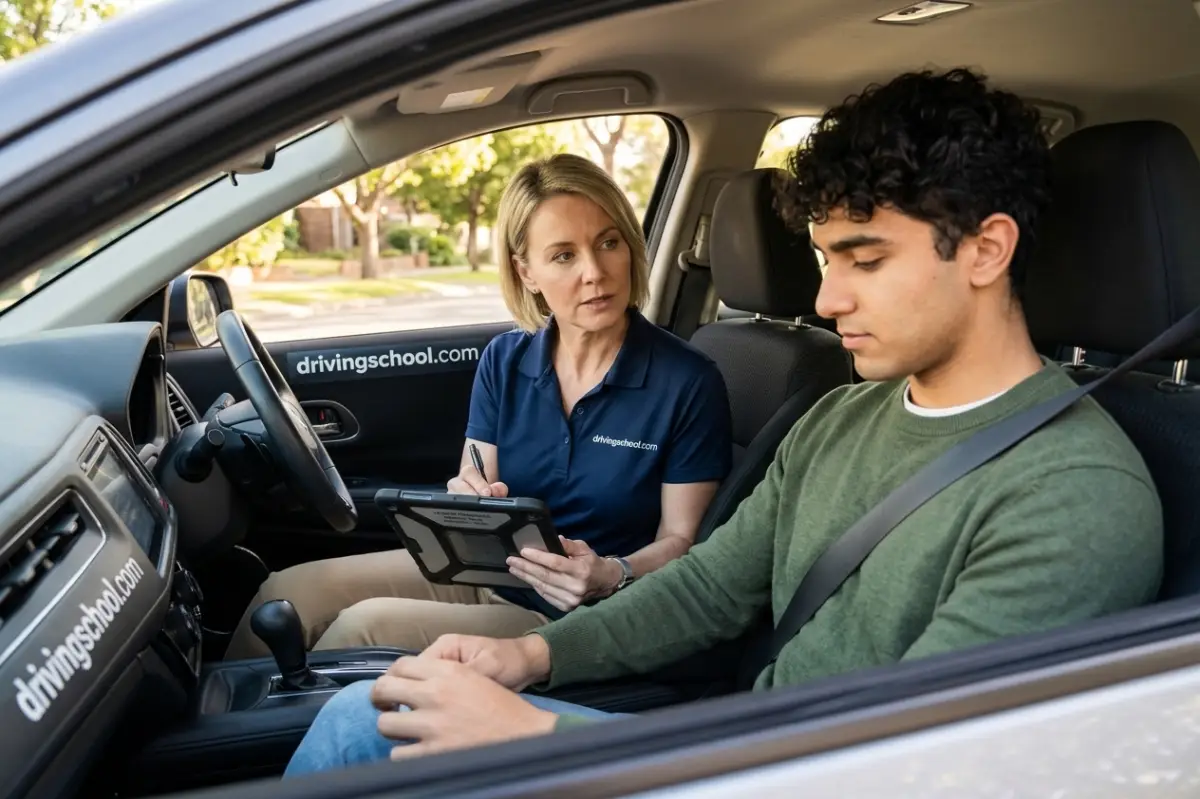
Learning to drive is one of the most consequential skills you’ll ever acquire — and where you learn matters just as much as how much you practice. Whether you’re a teenager navigating this milestone for the first time, an adult who never quite got around to earning a license, or a parent trying to find the safest possible environment for your child, choosing the right driving school is a decision that deserves serious thought, careful research, and a genuine understanding of what separates a quality program from a mediocre one. The road ahead is long — and the habits formed during those early lessons tend to stick for decades drivingschool.com.
Why Driving Education Is More Important Than Ever
Road safety statistics have a way of making the urgency concrete. According to the National Highway Traffic Safety Administration, 2,148 young drivers lost their lives in traffic crashes in 2023 — a five percent increase from the previous year. Teen drivers remain among the highest-risk groups on American roads, and the data consistently points to the same underlying cause: insufficient foundational training. Many new drivers enter traffic with just enough knowledge to pass their test but not nearly enough to handle the unpredictability of real roads.
This is why the driving school industry has grown steadily over the past several years. That growth isn’t just commercial — it reflects a genuine, society-wide recognition that structured driver education saves lives. Globally, the market is expanding at a compound annual growth rate of around five percent, driven by stricter regulatory requirements, rising awareness of road fatalities, and a surge in demand for commercial driver licensing programs.
But none of those numbers help you figure out which school on your street is worth your time and money. That’s where this guide comes in.
Will You Check This Article: Zee Chat Review: Everything You Need to Know in 2025
What a drivingschool.com Actually Teaches You
There’s a widespread misconception that driving schools exist primarily to help people pass the licensing test. While test preparation is certainly part of the picture, the best programs go considerably further. A well-designed curriculum covers the rules of the road in depth, but it also builds something harder to quantify: good judgment.
This means teaching hazard perception — the ability to anticipate a problem before it becomes an emergency. It means drilling defensive driving techniques so that students develop automatic responses to sudden braking, poor weather, or aggressive drivers. It means explaining vehicle dynamics in enough detail that a student understands why their car behaves differently on wet pavement or during a sharp corner taken too fast. And increasingly, it means discussing distractions — particularly the smartphone-related behaviors that have become the defining danger of modern driving.
The theoretical side of driver education often gets underestimated. Classroom instruction, when done well, doesn’t just review traffic signs and right-of-way rules. It builds a mental framework for reading the road as a dynamic, constantly shifting environment. Schools that treat this portion as a formality — rushing through it in a weekend seminar or compressing it into a few hours of online video — are doing their students a disservice.
Behind-the-wheel training is where the theory gets tested. The number of supervised practice hours matters enormously. Canada requires a minimum of twelve months under a graduated licensing program. The United States varies by state, but the general principle holds: more quality time behind the wheel produces safer drivers.
The Key Qualities That Separate Good Schools from Great Ones
Instructor Credentials and Teaching Style
The instructor is the most influential variable in your learning experience, and it’s worth thinking about carefully before you enroll anywhere. A good driving instructor isn’t just someone who knows how to drive — they’re someone who knows how to teach driving to people who don’t yet know how to drive. Those are genuinely different skills.
Look for certified instructors with formal credentials recognized by your state’s Department of Motor Vehicles or equivalent body. Ask the school directly about their instructors’ qualifications, how long they’ve been teaching, and whether they specialize in any particular age group or type of training.
Teaching style matters too. Some learners do better with patient, methodical instruction; others benefit from a more direct, structured approach. A school worth its reputation will take time to understand your learning needs before jumping into the first lesson. Pay attention during an introductory consultation: does the instructor ask about your prior experience, your anxieties, your schedule? Or do they treat you like the forty-third student this month?
Curriculum Depth and Flexibility
A comprehensive curriculum covers theory and practice in tandem — not sequentially. The approach of teaching all the classroom content first and then putting students in a car weeks later is an outdated model that produces drivers who’ve forgotten most of what they learned by the time they sit behind the wheel. Concurrent instruction, where theoretical concepts are introduced and then immediately practiced on the road, produces far better retention and skill development.
The curriculum should also be flexible enough to meet students where they are. Some learners need more time on highway driving; others struggle with parking or intersections. A cookie-cutter program that moves everyone at the same pace regardless of individual progress is a red flag. The best schools assess progress at each stage and adjust accordingly — more practice in areas of weakness, reinforcement of strong skills, and honest feedback throughout.
Defensive driving should be a core part of any program, not an add-on. This includes training for adverse conditions: rain, fog, low visibility, heavy traffic, construction zones, and the disorientation that can come from driving in unfamiliar areas. Schools that simulate risky scenarios — even in a controlled environment — give students a genuine edge when those conditions eventually arise on actual roads.
State Accreditation and Insurance Coverage
Before anything else, confirm that the school is properly licensed. No single federal agency oversees driving schools in the United States, which means accreditation and licensing requirements vary considerably by state. Check with your state’s DMV or Department of Education to verify that the school’s credentials are current and in good standing.
Insurance is a related but often overlooked factor. Driving schools should carry specific driver education and training auto insurance — this is distinct from standard vehicle insurance and provides different protections. Ask the school explicitly what coverage they maintain while students are in training vehicles. This matters more than most parents realize. Your personal auto insurer should also be informed when your teen begins formal driver training; while most carriers won’t increase premiums during the learner’s permit stage, policies vary.
Vehicle Condition and Safety Features
The vehicles used for training should be well-maintained, equipped with dual controls (meaning the instructor has their own set of brakes), and ideally fitted with modern safety technology. As advanced driver assistance systems — lane keeping, automatic emergency braking, blind spot monitoring — become standard in new cars, training in vehicles that include these features helps students understand how to work with, rather than against, these systems.
Pay attention to fleet age and maintenance practices when you visit. A school that runs students through lessons in aging vehicles with questionable upkeep is sending a subtle message about its overall standards.
Types of drivingschool.com and Programs
The driving education landscape has diversified considerably over the past decade. Understanding your options helps you find the format that genuinely suits your learning style and schedule.
Traditional in-person schools remain the most common format, offering structured classroom instruction combined with behind-the-wheel sessions. These programs work well for learners who benefit from face-to-face interaction and real-time feedback. They’re also typically the required format in states where in-person training is mandated for minors.
Online driver education platforms have expanded dramatically, particularly since 2020. Today, online training contributes an estimated fifty-five percent of total market share globally, with the offline model accounting for the remaining forty-five percent. For the theoretical portion of driver education, well-designed online programs can be just as effective as in-person instruction — and often more convenient for students managing school, work, or other commitments. The key qualifier is quality: interactive platforms with quizzes, scenario-based learning, and genuine engagement are meaningfully different from platforms that simply ask you to click through video slides.
Intensive or crash courses compress the learning timeline significantly, typically through multiple-hour daily sessions over one or two weeks. These can be useful for adult learners who need a license quickly, but they’re generally not recommended for teen drivers who benefit more from spaced practice over longer periods.
Specialized programs are worth knowing about. Defensive driving courses are available to all age groups and are sometimes required by courts or offered as insurance discounts. Commercial driver’s license programs have grown substantially in recent years due to ongoing labor shortages in trucking and logistics — many schools have added or expanded CDL training in response. Adaptive driving programs serve individuals with physical disabilities and require instructors with additional specialized training.
Red Flags to Watch Out For
Choosing the wrong driving school isn’t just an inconvenience — it can produce a driver who’s underprepared for the real road. A few warning signs are worth keeping in mind.
Any school that rushes the learning process to inflate its pass rates is prioritizing the wrong metric. A high test pass rate sounds reassuring, but if it’s being achieved by teaching students to perform well on a specific test rather than to drive well in real life, it’s essentially meaningless from a safety standpoint. The goal is not a license — it’s a competent, confident driver.
Schools that place more than one student in the training vehicle at a time during behind-the-wheel sessions are another concern. Research is fairly clear on this: the benefit to each student drops sharply when they’re sharing seat time with another learner, and the safety risk during any incident increases proportionally. One student, one instructor per session is the standard to look for.
Be cautious about schools that don’t involve parents or guardians in the learning process, particularly for teen drivers. The driving school provides structured training; the thousands of additional hours a new driver needs before developing genuine proficiency must come from supervised practice with family members. Schools that recognize this and give parents specific guidance — areas to focus on, skills to reinforce, stages to watch — are treating the process as a partnership rather than a transaction.
The Role of Technology in Modern Driver Training
The driving school industry is undergoing a genuine technological transformation, and it’s worth paying attention to which schools are embracing these changes thoughtfully rather than superficially.
Virtual reality training has moved from a novelty to a practical teaching tool. VR environments allow students to experience hazardous road conditions — black ice, dense fog, unexpected pedestrian crossings, sudden tire blowouts — in a safe, controlled setting where the consequences of an error are educational rather than catastrophic. Schools that incorporate simulator-based training alongside conventional behind-the-wheel sessions are giving students a broader range of experience before they ever encounter those conditions on a real road.
AI-powered learning platforms are beginning to reshape how theoretical instruction is delivered. Rather than presenting every student with the same content in the same order, adaptive systems analyze individual performance and adjust the material accordingly — spending more time on concepts a student is struggling with and moving more quickly through areas they’ve already mastered. The Dubai Transport Authority launched exactly this kind of platform in 2025, and similar systems are appearing in markets worldwide.
Digital school management tools have become standard in well-run operations. According to U.S. Department of Transportation data from 2025, over eighty percent of licensed driving schools in the country have integrated some form of digital management system covering scheduling, training documentation, and compliance tracking. For students and parents, this translates to easier booking, clearer progress tracking, and better communication with instructors.
How to Evaluate Schools Before You Commit
Once you’ve narrowed your options to a few candidates, a little due diligence goes a long way.
Start with online reviews across multiple platforms — Google, Yelp, and the Better Business Bureau are all useful, but read critically. Look for patterns rather than individual comments. Consistent feedback about instructor patience, vehicle condition, or scheduling flexibility is informative. A single glowing review or a single angry one tells you less than twenty reviews that keep mentioning the same things.
Ask for references directly. A school that’s confident in its product will have no hesitation in connecting you with former students or parents who can speak to their experience. If a school is reluctant to provide references, that reluctance is itself useful information.
Visit in person before you enroll. Observe the facility, inspect the training vehicles, and ask to speak with an instructor. Notice whether the staff communicates clearly, whether the environment feels organized and professional, and whether your questions are answered directly. A school that handles your inquiries dismissively before you’ve even become a customer isn’t likely to treat you better once you have.
Ask about the instructor who will actually work with your student — not just the school’s general credentials. Find out their background, their experience with learners in your specific age group or situation, and their availability. Consistency matters; a student who works with the same instructor throughout their training builds a learning relationship that’s difficult to replicate when instructors change session to session.
Finally, look at pricing with context. Driver education isn’t cheap, and the cost varies considerably depending on the program, location, and number of hours included. But the cheapest option available is rarely the best one. A school that offers significantly lower prices than its competitors is cutting costs somewhere — often in instructor quality, vehicle maintenance, or supervised driving time. Think of driver education the way you’d think of any professional service: the price should reflect genuine value, not just the path of least resistance.
Driving School for Adults: It’s Never Too Late
There’s an unfortunate stigma around adult learner drivers that discourages many people from pursuing a license they genuinely need. The reality is that adult learners often make excellent students. They tend to be more motivated, more self-aware of their weaknesses, and more willing to take instruction seriously. The anxiety that many adults feel is understandable — there’s something vulnerable about learning a new skill as a grown adult — but a good instructor will address that directly and create an environment where progress feels achievable.
Adult programs differ from teen programs in meaningful ways. The pacing is typically more flexible, the theoretical portion can often be completed online at the student’s own rhythm, and the behind-the-wheel instruction is tailored to the specific gaps in the learner’s experience rather than following a standardized teen curriculum. Many adults have some prior driving experience — perhaps from another country, or from operating vehicles in limited contexts — and a quality school will build on that foundation rather than ignoring it.
Making the Final Decision
Ultimately, the right driving school is the one that treats your safety — or your teenager’s safety — as the primary objective of every lesson. Not the test pass rate, not the convenience of online booking, not the lowest price point. Those things matter, but they’re secondary to the core purpose: producing drivers who are genuinely prepared for a lifetime on the road.
The driving school market will continue evolving. Electric vehicle training modules are increasingly being integrated into curricula as EV ownership rises. Eco-driving techniques — optimizing fuel efficiency through smoother acceleration and braking — are becoming standard topics. Advanced driver assistance system education is gradually becoming part of mainstream instruction. The best schools are already anticipating these shifts and building them into what they teach.
Conclusion
Choosing the right driving school is one of the most meaningful safety decisions a family can make. The hours spent in a well-structured program, guided by a qualified instructor in a safe vehicle with a curriculum that goes far beyond test preparation, lay the groundwork for every mile driven over the following decades. The numbers behind this industry tell a clear story: demand is growing, technology is reshaping what’s possible, and the stakes — measured in lives rather than market share — couldn’t be higher.
Take your time. Do your research. Ask the hard questions. A driving school that earns your confidence before you enroll will almost certainly earn it on the road too. And the driver who comes out the other side won’t just know how to pass a test — they’ll know how to navigate the world safely, confidently, and with the kind of judgment that no amount of luck can substitute for.
Read More:

Introduction
If you’ve spent any time researching modern educational technology, chances are you’ve come across EzClasswork — and for good reason. In a world where keeping students genuinely focused is one of the hardest challenges educators face, this platform has carved out a real reputation for doing something traditional methods rarely manage: making learning feel like something students actually want to do. Whether you’re a teacher trying to bring new energy into your classroom, a parent tracking your child’s academic progress, or a student looking for a smarter way to review tough subjects, EzClasswork brings an approach to digital education that’s hard to ignore. This guide digs deep into what the platform really offers, how it works in practice, and why it’s become a go-to resource for modern learners across grade levels.
What Exactly Is EzClasswork?
At its core, EzClasswork is a digital educational platform that blends interactive mini-games, classroom management tools, assignment tracking, and gamification features into a single, browser-accessible environment. The platform is built to serve a wide range of users — K-12 students, college-level learners, teachers managing multiple classes, parents following their children’s academic journey, and administrators overseeing entire school districts.
What sets EzClasswork apart from a simple homework portal or a generic e-learning site is the philosophy baked into its design. Rather than treating education as a series of tasks to complete, the platform treats it as an experience to engage with. Its developers recognized early on that the biggest obstacle in modern classrooms isn’t a lack of content — there’s no shortage of educational material available online. The real problem is motivation. When students aren’t intrinsically invested in what they’re learning, even the best lesson plans fall flat. EzClasswork tries to solve that problem by meeting students where they already are: in the world of interactive digital experiences.
The platform runs entirely in the browser using HTML5 technology, which means there’s nothing to download, no complicated installations, and no device restrictions. Whether a student is at a school desktop, a personal laptop, or a tablet at home, the experience remains consistent and accessible.
Will You Check This Article: Bromus Pumpellianus (BROPU): The Arctic Brome Grass Guide
The Science Behind Game-Based Learning
Before diving into the specific features of EzClasswork, it’s worth understanding why the game-based learning model works at all — because this isn’t just a gimmick. There’s a growing body of educational research supporting the idea that interactive, game-like environments produce measurably better learning outcomes than passive instruction.
A 2024 meta-analysis published in Frontiers in Psychology on early childhood education found that game-based learning consistently promotes stronger cognitive outcomes, social engagement, and emotional development compared to traditional instructional methods. Separately, research from Frontiers in Education in December 2024 confirmed that gamification — using elements like point systems, leaderboards, and challenges — meaningfully improves student engagement across academic, emotional, and behavioral dimensions.
The underlying mechanism is fairly intuitive. When students play a game, they receive immediate feedback on their decisions. They experience small wins that trigger dopamine responses, which keeps them motivated to continue. They also learn from failure in a low-stakes environment — a concept that psychologists call “productive struggle.” Unlike a graded test where a wrong answer feels penalizing, a game where the same wrong answer simply resets the level teaches persistence without shame. These dynamics, when properly applied to educational content, create a learning environment that is not just more enjoyable but genuinely more effective.
EzClasswork is built on exactly these principles. Its mini-games aren’t just pretty wrappers around flashcard content. They’re designed to require the application of knowledge, the testing of reasoning, and the development of problem-solving habits that carry over into formal academic settings.
Core Features That Define the EzClasswork Experience
Mini HTML5 Educational Games
The most immediately visible feature of the platform is its library of interactive mini-games. These cover a broad range of academic subjects including mathematics, science, language arts, social studies, and logic. Each game is purpose-built to reinforce specific learning objectives rather than simply entertain.
What makes these games educationally effective is their adaptive difficulty mechanism. Rather than presenting a fixed level of challenge to every student, the platform uses artificial intelligence to assess a student’s performance in real time and adjusts the complexity of questions and scenarios accordingly. A student who breezes through basic multiplication is automatically presented with more advanced operations, while a student who struggles with foundational concepts receives additional reinforcement before progressing. This kind of personalized pacing — sometimes called adaptive learning — is one of the most significant advances in educational technology because it eliminates the one-size-fits-all problem that plagues traditional classroom instruction.
Some of the popular game types on the platform include math puzzles that require students to solve equations in order to progress through levels, language arts challenges that build vocabulary and grammar through interactive storytelling, science-based simulations that teach cause-and-effect reasoning, and logic games that develop critical thinking skills across multiple subject areas.
Assignment Management and Classroom Tools
Beyond the gaming library, EzClasswork also functions as a comprehensive classroom management system. Teachers can create, distribute, and collect assignments entirely through the platform, eliminating the paper trail that still burdens many classrooms. Automated grading tools handle objective assessments — quizzes, multiple-choice questions, short answer prompts — and deliver instant feedback to students without requiring teachers to spend hours reviewing individual submissions.
This is not a small thing. One of the most persistent complaints from educators is that administrative work consumes time that should go toward instruction and relationship-building. When grading routine assignments becomes automated, teachers can redirect their attention to the nuanced, human-centered parts of their job: identifying struggling students early, providing encouragement, facilitating deeper discussions, and personalizing instruction where technology can’t.
Real-Time Progress Tracking and Analytics
Both teachers and students benefit from EzClasswork’s analytics dashboard, which tracks performance over time and highlights patterns that might otherwise go unnoticed. A teacher managing thirty students simultaneously can use the dashboard to see at a glance which students are excelling, which are falling behind, and on which specific topics learning breakdowns are occurring. This data-driven approach to classroom oversight transforms what used to be a reactive process — noticing a student is struggling only after a poor exam result — into a proactive one.
Students, meanwhile, can view their own progress reports, which builds metacognitive awareness. When a learner can see not just their grade but also which specific skill areas need improvement, they’re better equipped to take ownership of their own learning journey. This sense of agency is particularly valuable for older students developing habits of self-directed study.
Gamification Elements: Points, Badges, and Leaderboards
Woven throughout the platform’s experience is a gamification layer that keeps motivation high even when the content itself becomes challenging. Students earn points for completing assignments, reaching milestones, and improving on previous attempts. Badges reward mastery in specific skill areas, and leaderboards introduce an element of healthy competition among peers.
It’s worth noting that leaderboards, when poorly implemented, can be discouraging for students who consistently rank lower. EzClasswork addresses this thoughtfully by also emphasizing personal progress metrics — comparing a student’s current performance to their own past performance, not just to classmates. This design choice reflects a more sophisticated understanding of motivation psychology: the most durable motivation comes from a sense of personal growth, not just competition.
Accessibility and Inclusive Design
The platform includes several features specifically designed for students with different learning needs. Adjustable text sizes, text-to-speech capabilities, and alternative navigation options support students with visual impairments or reading difficulties. The multilingual interface makes the platform accessible to students from diverse cultural backgrounds, and the browser-based format ensures that students without high-end devices or fast internet connections can still participate.
For schools in underserved communities, this commitment to accessibility is particularly significant. Many edtech platforms effectively serve only the students who already have the best resources. EzClasswork’s design philosophy pushes deliberately in the opposite direction.
How EzClasswork Works for Different Stakeholders
For Students
For students, the experience of using EzClasswork is closer to spending time on a gaming platform than sitting through a lesson. They log in, browse a categorized library of games and activities organized by subject and grade level, and select whatever aligns with what they’re currently studying. There are no lengthy loading screens, no account-creation hurdles, and no confusing navigation menus. The interface is designed to get out of the way and let learning happen.
The adaptive AI system means that students don’t spend time on material they’ve already mastered — a problem that causes significant boredom and disengagement in traditionally paced classrooms. Instead, they’re consistently challenged at the edge of their current ability, which educational psychologists describe as the “zone of proximal development.” Spending more time in that zone accelerates both comprehension and retention.
For Teachers
Teachers interact with EzClasswork less as players and more as architects. The platform gives educators the tools to build out a customized learning environment that reflects their specific curriculum, teaching style, and student population. They can assign specific games to specific groups, create custom assessments, set deadlines, and monitor results — all from a centralized dashboard that doesn’t require any technical expertise to navigate.
The platform also integrates with existing learning management systems (LMS), which means schools that already use tools like Google Classroom or similar platforms don’t need to wholesale replace their existing infrastructure. EzClasswork slots in alongside what’s already working, rather than demanding a complete overhaul.
For teachers who work with special education students, the customization features are particularly valuable. Assignments can be tailored to individual learning plans, and progress reports are detailed enough to support IEP (Individualized Education Program) documentation and parent communication.
For Parents
Parent involvement in a child’s education has consistently been shown to improve academic outcomes, yet most school platforms make it surprisingly difficult for parents to stay genuinely informed. EzClasswork includes parent-facing tools that provide real-time updates on assignment completion, grades, and areas where a student is progressing or struggling.
The communication tools built into the platform also allow parents to message teachers directly without needing to navigate separate email threads or wait for quarterly report cards. This ongoing communication channel helps catch problems early and creates a three-way partnership between the student, teacher, and parent that research consistently identifies as a key factor in academic success.
For School Administrators
At the district or institutional level, EzClasswork provides the kind of systemic oversight that administrators need to make evidence-based decisions. Aggregate performance data across classrooms and grade levels reveals which curriculum areas might need supplemental support, which teachers might benefit from additional professional development resources, and how the school or district as a whole is trending over time.
Training resources, tutorials, and user guides provided by the platform help administrators roll out the system smoothly across an entire institution, reducing the friction that often accompanies large-scale technology adoption in schools.
EzClasswork Unblocked: Why Access Matters
One of the recurring topics that comes up in discussions about EzClasswork is the concept of “unblocked” access. Many school networks and institutional firewalls are configured to restrict access to gaming websites, often without distinguishing between purely recreational sites and genuinely educational ones. This creates an ironic situation where a platform specifically designed to support classroom learning is blocked within the very classrooms it’s meant to serve.
EzClasswork is designed to function on most standard school networks without triggering these restrictions. Because the platform is browser-based and built on HTML5 rather than Flash or other older technologies, it presents fewer of the technical red flags that cause overzealous content filters to block sites. Students can access the platform from school networks, home broadband connections, and even mobile data without encountering the barriers that affect many similar tools.
This frictionless access isn’t just a convenience — it’s a meaningful equity issue. When a platform requires specific technical workarounds to access, it disproportionately disadvantages students from less tech-savvy households or schools with less sophisticated IT support. EzClasswork’s approach to accessibility by design helps level that playing field.
Practical Tips for Getting the Most Out of EzClasswork
If you’re a teacher integrating EzClasswork into your curriculum for the first time, starting small produces better results than attempting a full overhaul immediately. Begin by identifying one or two subjects where engagement is consistently low, and introduce relevant EzClasswork games as a supplemental review activity a few times per week. Track student performance data before and after the introduction and use that evidence to guide further expansion.
For students using the platform independently, the best approach is to treat it like training rather than entertainment. Choose games that target your specific weak areas rather than defaulting to subjects where you’re already comfortable. The AI’s adaptive difficulty will push you more effectively if you let it reveal where your genuine gaps are, rather than sticking to the material that feels easy.
Parents can help by checking the progress dashboard regularly and talking with their children about what they’re working on. When parents express genuine interest in a child’s learning — not just their grade — it signals that the effort matters and increases the likelihood that the student will engage seriously with the material.
Limitations Worth Knowing About
No educational platform is perfect, and a balanced assessment of EzClasswork has to acknowledge its limitations honestly. Screen time remains a legitimate concern. Spending extended periods engaged with any digital platform — even an educational one — can contribute to eye strain, reduced physical activity, and the broader issues associated with prolonged device use in children. Parents and teachers should treat EzClasswork as one tool among many rather than a complete replacement for other forms of learning.
The transition from traditional teaching methods to digital platforms can also be genuinely difficult for educators who aren’t comfortable with technology. EzClasswork provides training resources, but the learning curve is real, and schools should factor in adequate professional development time when adopting the platform.
There are also equity considerations around device access. While the platform itself is free for many features, schools or families may need to invest in additional tools for full functionality, and not every student has reliable access to a personal device outside of school hours. These are systemic challenges that EzClasswork alone cannot solve, though the platform’s browser-based design and offline caching features for limited connectivity environments help mitigate some of these concerns.
The Future of EzClasswork and Educational Technology
The trajectory of EzClasswork reflects broader trends in educational technology that are worth paying attention to. The platform’s development team is actively exploring integrations with augmented reality (AR) and virtual reality (VR) to create genuinely immersive learning environments — imagine a science student exploring a virtual ecosystem to understand biodiversity rather than reading about it from a textbook. These innovations are still emerging, but they signal where the most forward-thinking educational platforms are heading.
Artificial intelligence integration is also deepening. Beyond adaptive difficulty adjustment, AI in educational platforms is beginning to serve roles like intelligent tutoring — identifying not just that a student is struggling, but why, and offering targeted interventions based on specific misconceptions. Personalized learning paths that adjust not just difficulty but also content sequencing, pacing, and presentation style based on individual learner profiles are increasingly viable as the underlying AI technology matures.
The edtech sector more broadly has seen explosive growth in recent years, and platforms that combine genuine pedagogical rigor with engaging user experience design are pulling ahead of tools that prioritize one at the expense of the other. EzClasswork’s dual focus on learning effectiveness and student experience positions it well for this evolving landscape.
Conclusion
EzClasswork represents something genuinely worth paying attention to in the world of educational technology. By combining thoughtfully designed interactive learning games, adaptive AI, real-time performance analytics, and accessible classroom management tools into a single browser-based platform, it addresses several of the most persistent challenges in modern education simultaneously. It makes engaging with academic content feel less like a chore and more like a choice — and that psychological shift, backed by real research on game-based learning, translates into measurably better outcomes for students.
The platform isn’t a silver bullet, and it works best when used as one component of a thoughtful, blended approach to teaching rather than a replacement for human instruction. But for educators and parents willing to embrace the possibilities that modern edtech offers, EzClasswork provides a practical, well-designed starting point. The most valuable takeaway is this: the future of learning isn’t about choosing between rigor and engagement. The most effective educational environments, digital or otherwise, deliver both — and that’s exactly what this platform is built to do.
Read More: Mynewsdaily.co.uk

How to Choose the Right drivingschool.com for Lifelong Safety

Zee Chat Review: Everything You Need to Know in 2025

mSales: The Complete Guide to Smarter Sales Force Automation

DigitalEdge.org: Your Gateway to Smarter Digital Growth

Daylin Ryder: The Creative Visionary Redefining Authentic Storytelling

Louisa Kochansky: The Visionary Leader Redefining Modern Excellence
-
 Tech1 week ago
DigitalEdge.org: Your Gateway to Smarter Digital Growth
-
 Celebrity1 week ago
Daylin Ryder: The Creative Visionary Redefining Authentic Storytelling
-
 Celebrity7 days ago
Louisa Kochansky: The Visionary Leader Redefining Modern Excellence
-

 Entertainment2 days ago
Soundgasm Explained: The Complete Guide to the Audio Platform Everyone’s Talking About
-

 Travel4 days ago
Senaven: The Complete Guide to Its Uses, Benefits, and Modern Relevance
-

 Sports23 hours ago
TotalSportek: The Complete Guide to the World’s Most Searched Sports Streaming Platform
-

 Business7 days ago
Pertadad: Meaning, Origins, and Its Rising Digital Identity
-

 Blog5 days ago
Alaskan Seiti: The Deep-Sea Treasure Reshaping Sustainable Seafood